

American Name Calling
When Thinking Gives Way
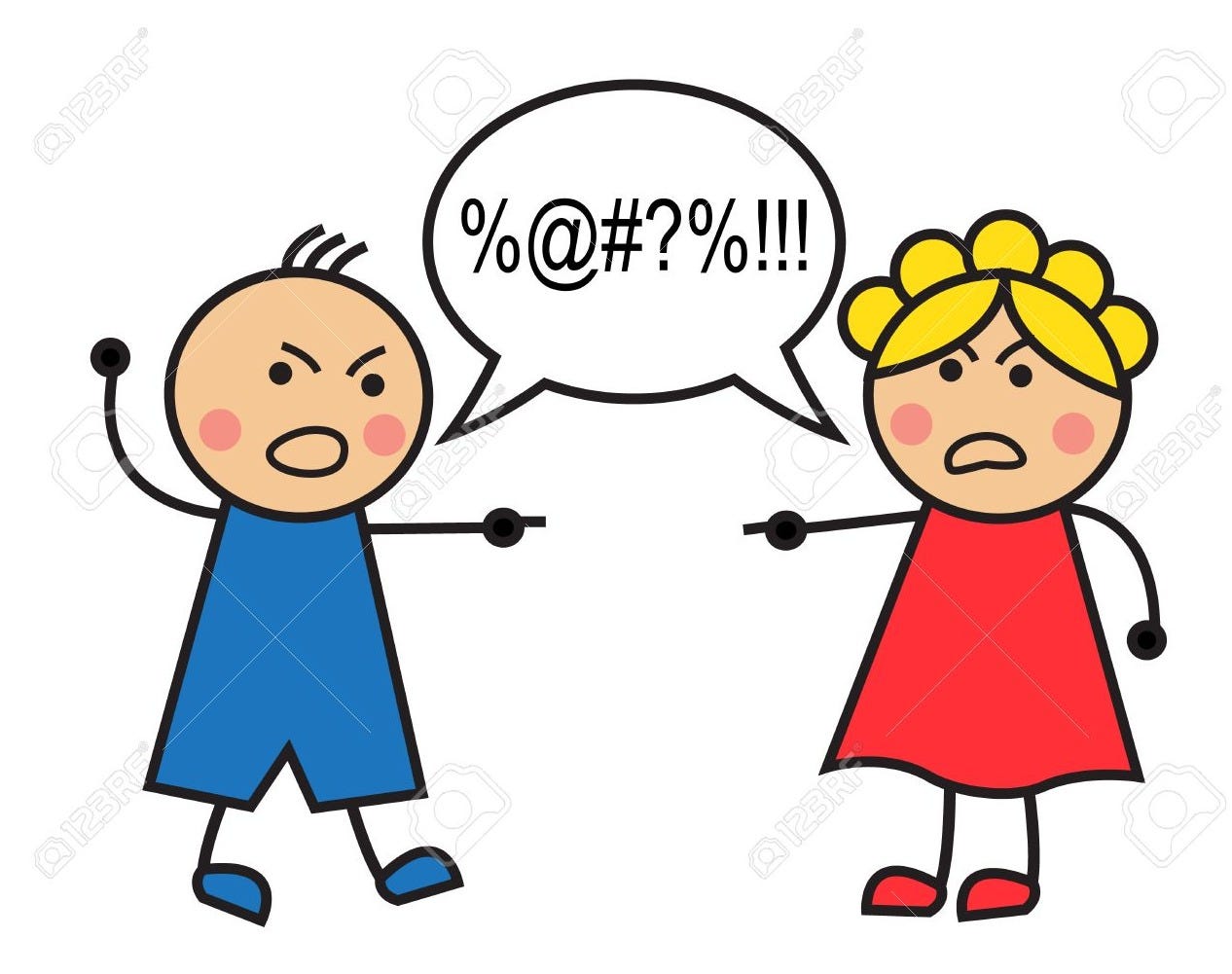
Is there a better example of the double‑sided nature of life in the internet age than social media? One moment I’m catching up on the dining habits of the woman I sat next to at my first real job; the next, I’m confronted by the transformation of a college friend, someone I remember as thoughtful and accomplished, into a caricature of certainty and contempt.
This whiplash has become routine, particularly in political conversations. Again and again, I watch discussions that might once have included arguments about policy, values, or even character devolve instead into name‑calling. Whatever the issue, it is increasingly rare for someone make a case for what they believe without first, or finally, denigrating “the other side.”
What unsettles me most is not that this behavior exists online. I expect less than ideal conduct from pseudo-anonymous avatars, but that it now comes so easily to people who should know better. People who are educated. People who have successfully led others. People who once helped others know how to think rather than what to think. When name‑calling becomes the default response, it signals something deeper than mere disagreement; it suggests an abdication of responsibility. It suggests a shift in our culture toward bombast and away from healthy democratic debate.
Have Labels Replaced Thinking?
Name‑calling is tempting because it is efficient. It collapses a complex disagreement into a single word and replaces explanation with certainty. Why wrestle with an opposing argument when a label can dismiss it outright? Lefty. Ignorant. Corrupt. Once applied, the label does all the work. The speaker is relieved of the obligation to persuade.
But this efficiency is deceptive. It doesn’t strengthen an argument; it substitutes for it. In practice, name‑calling functions less as criticism and more as crowd signaling—a way of demonstrating allegiance without taking the risk that real engagement requires. It rewards moral posture over intellectual effort and converts disagreement into something closer to sport than deliberation.
The cost of this shift is easy to overlook but hard to reverse. When labels replace arguments, curiosity becomes suspect. Asking questions is treated as bad faith. Nuance is seen not as thoughtfulness but as weakness. Over time, the very habits that make democratic disagreement possible, things like listening, reasoning, conceding truths, partial or otherwise —atrophy from disuse.
Why This Turn to Name-Calling?
It’s easy to point to the shortcuts encouraged by modern platforms—brevity over depth, reaction over reflection—and there is something to that. Name‑calling requires little effort. It can replace explanation with certainty and speed with loudness. But stopping there feels too shallow, and too close to doing exactly what this essay argues against: dismissing ideas or behavior without trying to understand them.
When I read what appears in my social media feed, I often find myself asking a different question altogether: What happened to you? What experiences left you this angry? What did “the other side” do to you that made contempt feel not just justified, but necessary? Or, possibly, what has your source of information been telling you has been done to you?
In conversations with Republican friends, especially those who share a background similar to my own, and knowing that I was raised as one of them, I hear some version of two answers over and over again. First: The Dems ignored me. My concerns weren’t taken seriously. My anxieties were dismissed as backward, naive, or morally suspect. Second: The wacky left has been mean to my guy. Not merely critical, but contemptuous, treating support for him as proof of stupidity , racism or malice rather than as something to be understood or argued against.
Those grievances matter, not because they excuse what follows, but because they explain its emotional force. Name‑calling flourishes in environments where people feel unseen, disrespected, or written off. In that context, politics becomes personal in the deepest sense. Labels stop being rhetorical tools and start functioning as retaliation.
Within that frame, events that might otherwise invite scrutiny are reinterpreted as attacks. A felony conviction becomes proof that the justice system itself must be corrupted. A raid on the former president’s home is understood not as law enforcement, but as persecution. Facts are subordinated to the moral story already being told.
Once that story takes hold, name‑calling begins to feel not only permissible but necessary. If the system is corrupted and the opposition is acting in bad faith, then restraint looks like surrender. Condemnation becomes a form of self‑defense.
Anger, then, is not incidental—it is central. For many people, political language now carries the weight of accumulated frustration: economic insecurity, cultural displacement, diminishing status, or the simple feeling of no longer being listened to. Name‑calling offers release. It transforms unease into certainty and resentment into righteousness. It gives anger a target and, briefly, a sense of control.
There is also a deeper psychological driver at work: the need to be right. That impulse is as old as humanity, and exists in all of us to some degree, but it has taken on an especially corrosive form in contemporary American politics. Being right is no longer primarily about arriving at better answers or improving people’s lives through compromise. It is about victory. About moral dominance. About proving one’s opponents not merely wrong, but illegitimate and unpatriotic, if not criminal.
In my memory, this shift became unmistakable in the political realignments of the 1990s, the Gingrich era in particular, when politics increasingly framed itself as combat. What once sounded like disagreements about means and ends hardened into an us‑versus‑them struggle. The central question subtly changed from What should we do? to How do we defeat them? Once politics is understood that way, name‑calling is not a deviation from the system; it is the system expressing itself honestly.
Social media intensifies all of this. It rewards outrage, not restraint. Certainty travels faster than curiosity. Mockery outperforms explanation. In that ecosystem, name‑calling signals belonging—it tells an audience exactly where you stand and whom you oppose. And in an anxious, fragmented culture, belonging can feel more urgent than understanding.
None of this excuses the behavior. But it does help explain why it is so widespread, and why it is so difficult to resist.
Should We Make a Harder Choice?
Understanding why name‑calling has become so prevalent does not require us to accept it as inevitable or unavoidable. Explanation is not absolution. Empathy, however necessary, does not require powerless acceptance of a degrading democratic system.
The challenge, then, is not simply to recognize the forces that push us toward insult and dismissal, but to resist them, especially when resistance feels unfair. Especially when we feel provoked. Especially when we are convinced we are right.
There is a cost to that resistance. Engaging seriously with people who misunderstand you—or whom you believe to be wrong—requires patience. It requires the willingness to be misread, to be caricatured, and to respond anyway without reaching for the same weapons. Name‑calling offers something much easier: momentary relief, social approval, and the quiet satisfaction of having struck back.
This creates an even narrower path back to persuasion. Once we reduce our opponents to labels, we quietly concede that we no longer believe arguments matter. We signal that power and derision have replaced reasoning as the tools of civic life.
This is where the burden falls most heavily on those who value thoughtfulness, education, or leadership: on people who claim to care not just about winning, but about outcomes. If we abandon argument in favor of contempt, we cannot later lament that no one listens, that institutions fail, or that politics feels irreparably broken. We will have helped make it so.
The challenge is not to be neutral, or to soften convictions, or to pretend all ideas are equal. It is something more disciplined and more demanding: to argue without demeaning. To criticize without dehumanizing. To insist—through our own conduct—that persuasion is still possible, even when it feels unlikely.
That choice will not always be rewarded. It will not go viral. It may not even change any minds in the short term. But it preserves something essential: the belief that ideas, carefully stated and honestly defended, still have a place in our public life.
There are other ways to engage than social media, of course, ways that make listening easier and caricature harder. It is not the right tool for every communication task. Sometimes, it may be best to step back from an online exchange that shows no sign of moving in a positive direction. As distasteful as it can be, sometimes writing an e-mail to someone or picking up the phone makes it easier to engage in civil conversation.
If name‑calling is the symptom of a politics that has given up on dialogue, then refusing to engage in it is not naïveté. It is an act of commitment: to democracy, to responsibility, and to the possibility that disagreement need not be the end of understanding. In a culture addicted to certainty, choosing respectful conversation is a small but meaningful form of dissent.
The issue is that this round of name calling in the public forum began as a way of holding people accountable for the grievances and social scars a segment of the conservatives believe they carry. It was also a substitute for arguing against “political correctness.” What better way to push back on the alleged attack on free speech than to use shocking references. Remember back with Clinton, the talk radio critics could not fathom why the “media” would not call him a “liar.” Insults and name calling have become a badge of communication that the speaker will speak plainly, to the point, and “honestly.” When Trump spins his confabulated remarks, the insults he uses are proof to the followers that he is honest, straight forward and not an elite politician. As misguided as it is, it is the reality for the many who seek a leader who will vindicate their “loss”. And not care about the ramifications.